
Introduction
Choosing the right website is very important for any business in 2026. Today, businesses need websites that are fast, user-friendly, mobile responsive, and SEO-friendly.
When creating a website, one common question is:
Should you choose a static website or a business website?
Both website types have their own advantages and disadvantages. The best option depends on your business goals, budget, and future plans.
In this blog, we will understand the difference between static and modern website in simple language and help you choose the right one for your business.
Competitor Analysis
Most competitor blogs only explain:
- Basic definitions
- Speed comparison
- Simple pros and cons
But they miss:
- SEO impact
- AI and automation trends
- Business scalability
- Modern website technologies
- Future business needs
This article covers all these gaps in easy words.
What is a Static Website?
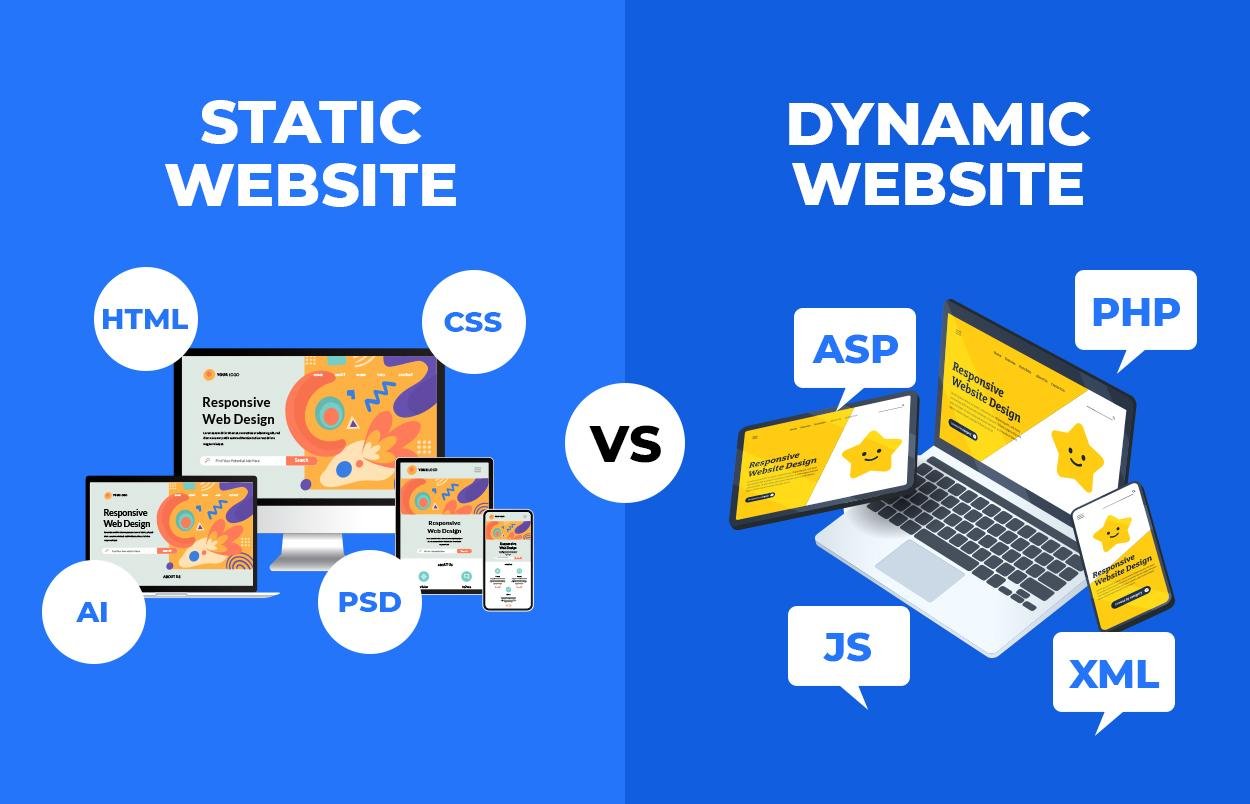
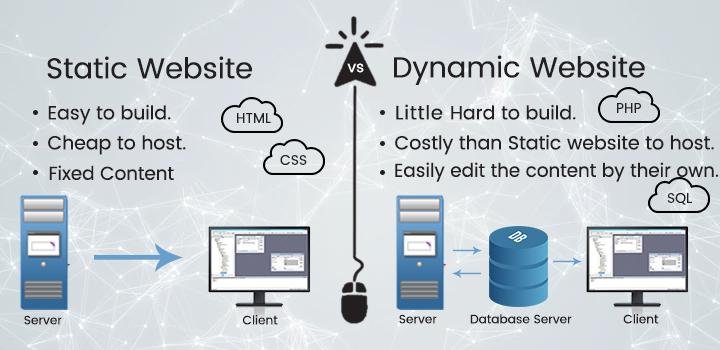
A static website shows the same content to every visitor.
The pages are created using:
- HTML
- CSS
- JavaScript
The content does not change automatically unless a developer manually updates the code.
Static websites are simple, lightweight, and fast.
Examples of Static Websites
Static websites are commonly used for:
- Portfolio websites
- Company profile websites
- Landing pages
- Personal websites
These websites usually have limited pages and rarely change.
Advantages of Static Websites
1. Faster Loading Speed
Static websites load very quickly because they do not use databases or server-side processing.
Fast websites improve:
- User experience
- SEO ranking
- Mobile performance
2. Better Security
Static websites are more secure because they have:
- No database
- Less server interaction
- Fewer security risks
This reduces chances of hacking.
3. Lower Cost
Static websites are cheaper to:
- Develop
- Host
- Maintain
They are a good option for small businesses with low budgets.
4. Easy Hosting
Static websites can be hosted easily on platforms like:
- GitHub Pages
- Netlify
- Vercel
Disadvantages of Static Websites
1. Difficult to Update
Every content change requires manual editing.
If you regularly update:
- Blogs
- Products
- Services
then static websites become difficult to manage.
2. Limited Features
Static websites cannot easily support:
- User login
- Ecommerce
- Live chat
- Dynamic forms
- Personalization
3. Limited Scalability
Static websites are not ideal for growing businesses that need advanced functionality.
What is a Dynamic Website?
A dynamic web solution displays content that can change automatically based on:
- User actions
- Database information
- Location
- Preferences
Interactive website use technologies like:
- PHP
- Python
- Node.js
- WordPress CMS
The content is generated in real time.
Examples of Dynamic Websites
Dynamic web solution are used for:
- Ecommerce websites
- Social media platforms
- News websites
- Blogging websites
- Booking websites
Popular examples:
- Netflix
- Amazon
Advantages of Dynamic Websites
1. Easy Content Management
Advanced website solution allow easy updates using CMS platforms like:
- WordPress
- Joomla
- Drupal
You do not need coding knowledge for every update.
2. Better User Experience
Dynamic websites provide:
- Personalized content
- User interaction
- Search functionality
- Login systems
This improves customer engagement.
3. Highly Scalable
Dynamic websites can grow with your business.
You can easily add:
- New pages
- Products
- Features
- Integrations
This makes them perfect for growing companies.
4. Better for SEO in Long Term
Dynamic websites support:
- Regular content updates
- Blogging
- Metadata management
- SEO plugins
This helps improve search engine rankings.
Disadvantages of Dynamic Websites
1. Higher Development Cost
Dynamic websites are more expensive because they need:
- Backend development
- Database management
- Advanced hosting
2. Slower Speed
Dynamic websites may load slower because pages are generated in real time.
However, proper optimization can improve performance.
3. Higher Security Risks
Because dynamic websites use databases and server-side scripting, security risks are higher.
Regular updates and security management are necessary.
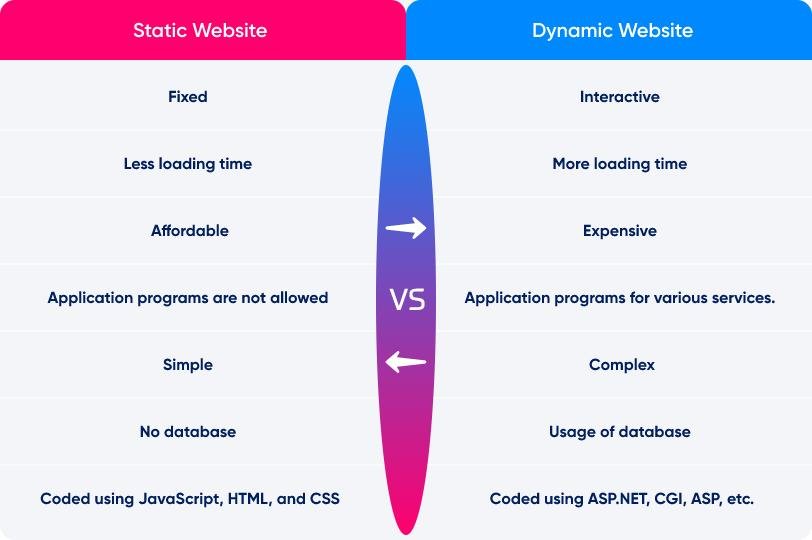
Static vs Dynamic Website Comparison
| Feature | Static Website | Dynamic Website |
|---|---|---|
| Speed | Faster | Moderate |
| Cost | Lower | Higher |
| Security | More secure | Needs strong security |
| Scalability | Limited | High |
| SEO | Good for speed | Better for content SEO |
| Maintenance | Manual updates | Easy CMS updates |
| User Interaction | Limited | Advanced |
| Best For | Small simple websites | Growing businesses |
Which Website is Better for SEO?
Both website types can perform well in SEO.
Static Website SEO Benefits:
- Faster loading
- Simple structure
- Better performance
Dynamic Website SEO Benefits:
- Frequent updates
- Blogging support
- SEO plugins
- Dynamic metadata
A modern business website helps improve SEO and scalability. Interactive web solutions also provide better customer experience.
AI and Modern Website Trends in 2026
Modern websites are changing with:
- AI chatbots
- Personalized content
- Automation
- Headless CMS
- JAMstack technology
Today, many businesses use hybrid solutions that combine:
Static speed + Dynamic flexibility
This is becoming a major trend in 2026.
When Should You Choose a Static Website?
Choose a static website if:
- You need a simple website
- Your content rarely changes
- You have a low budget
- You want maximum speed
Best for:
- Portfolio websites
- Small company websites
- Landing pages
When Should You Choose a Dynamic Website?
Choose a dynamic website if:
- You update content regularly
- You need ecommerce features
- You want user interaction
- Your business will grow online
Best for:
- Ecommerce websites
- Blogs
- Booking systems
- Membership websites
Final Verdict: Which is Better?
For most businesses in 2026:
Dynamic websites are the better long-term option.
Why?
Because businesses now need:
- Scalability
- SEO growth
- User interaction
- Automation
- AI integration
However, static websites are still excellent for small and simple projects.
The best choice depends on your business goals and future plans.
Final Conclusion
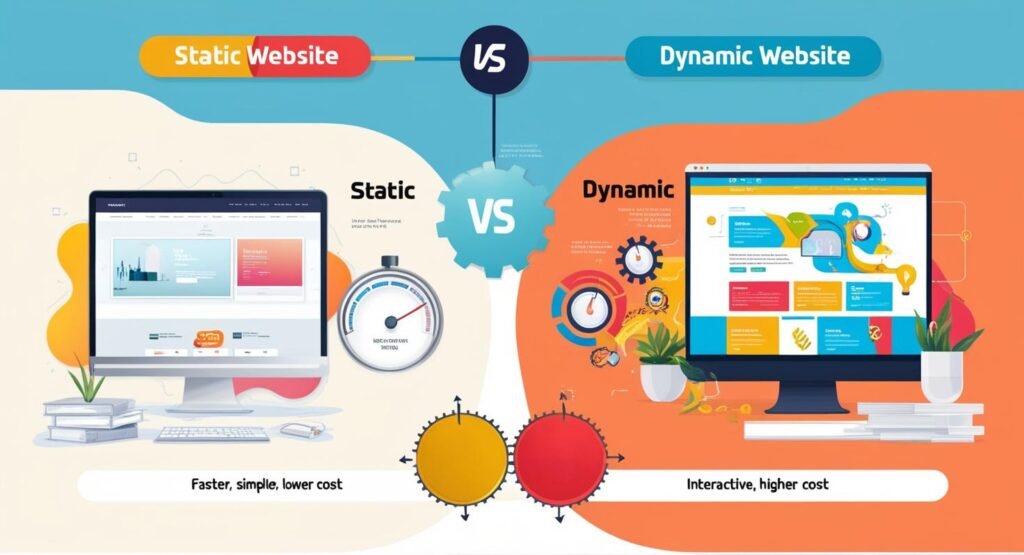
Both static and dynamic websites have advantages.
Choose Static Website If:
✔ You want speed
✔ You want low cost
✔ You need a simple website
Choose Dynamic Website If:
✔ You want growth
✔ You need advanced features
✔ You want better long-term SEO
In 2026, businesses should focus on websites that are fast, scalable, SEO-friendly, and user-focused.
That is the key to online success.
